An early 20th century tribal kelleh, attributed to the Baluch weaving tradition of north-eastern Persia, probably Khorasan.
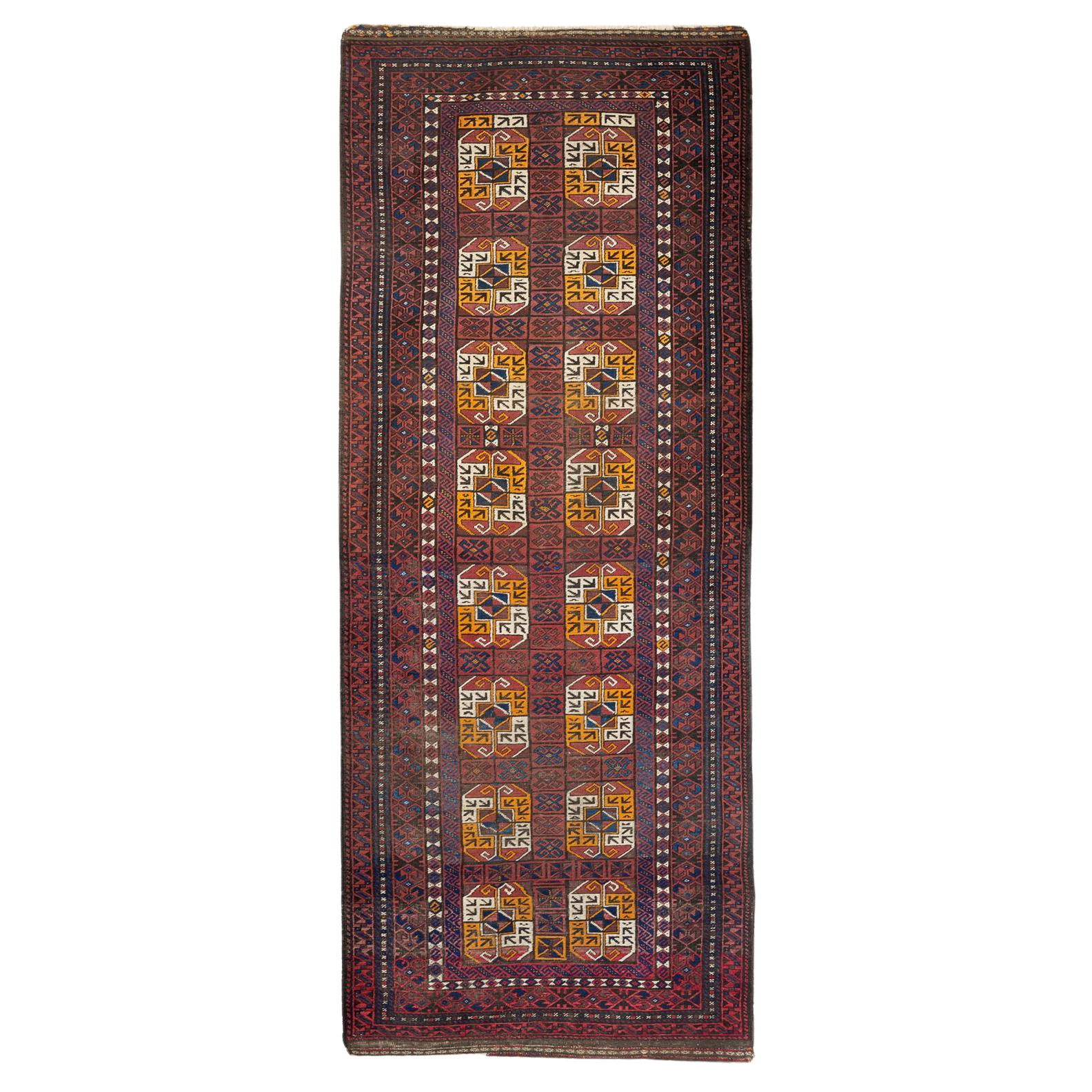
The long rectangular field is arranged with two rows of eight geometric medallions, worked in ivory, ochre, indigo and madder tones against a deep red ground. The field is enclosed by multiple narrow geometric borders in the characteristic dark palette associated with Baluch weaving.
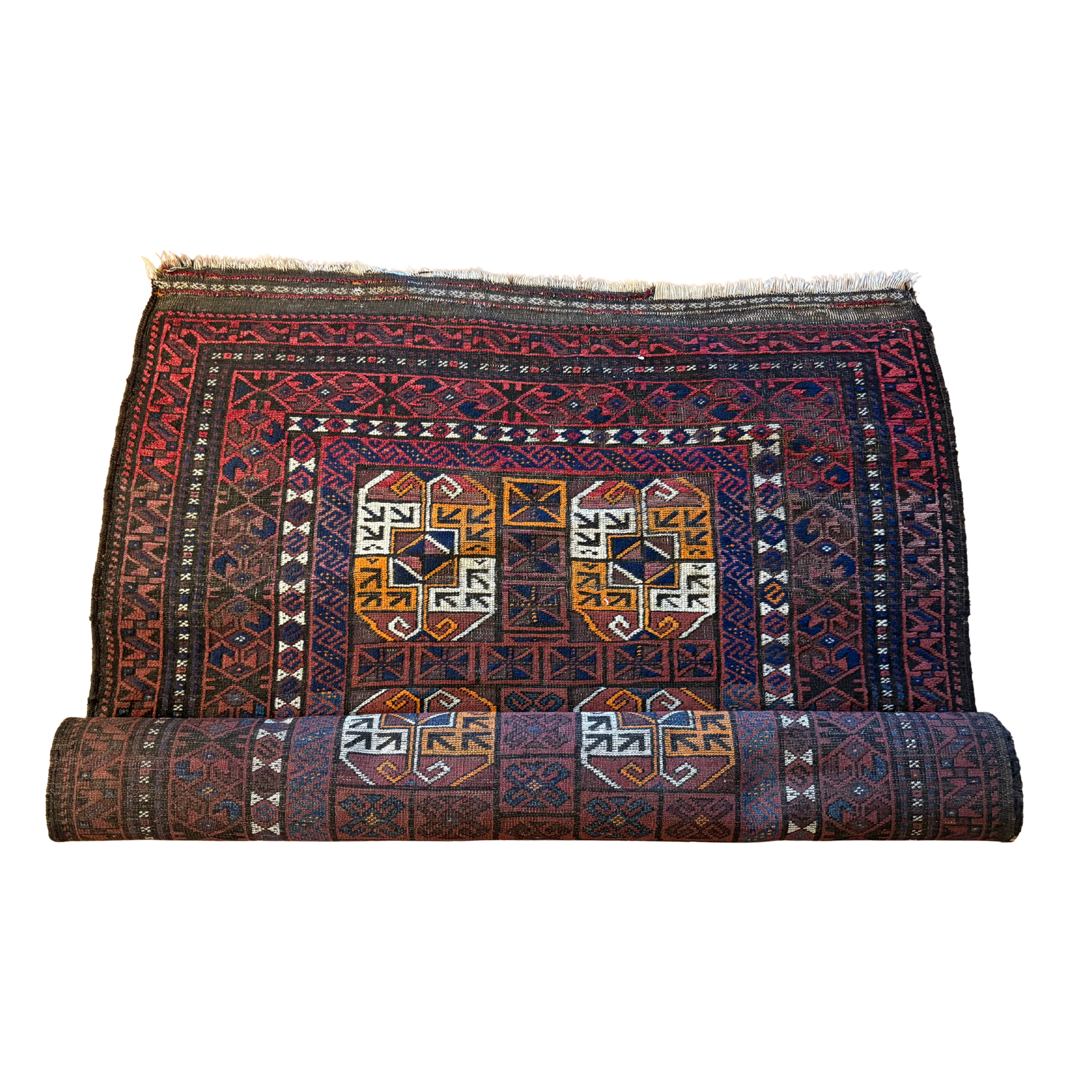
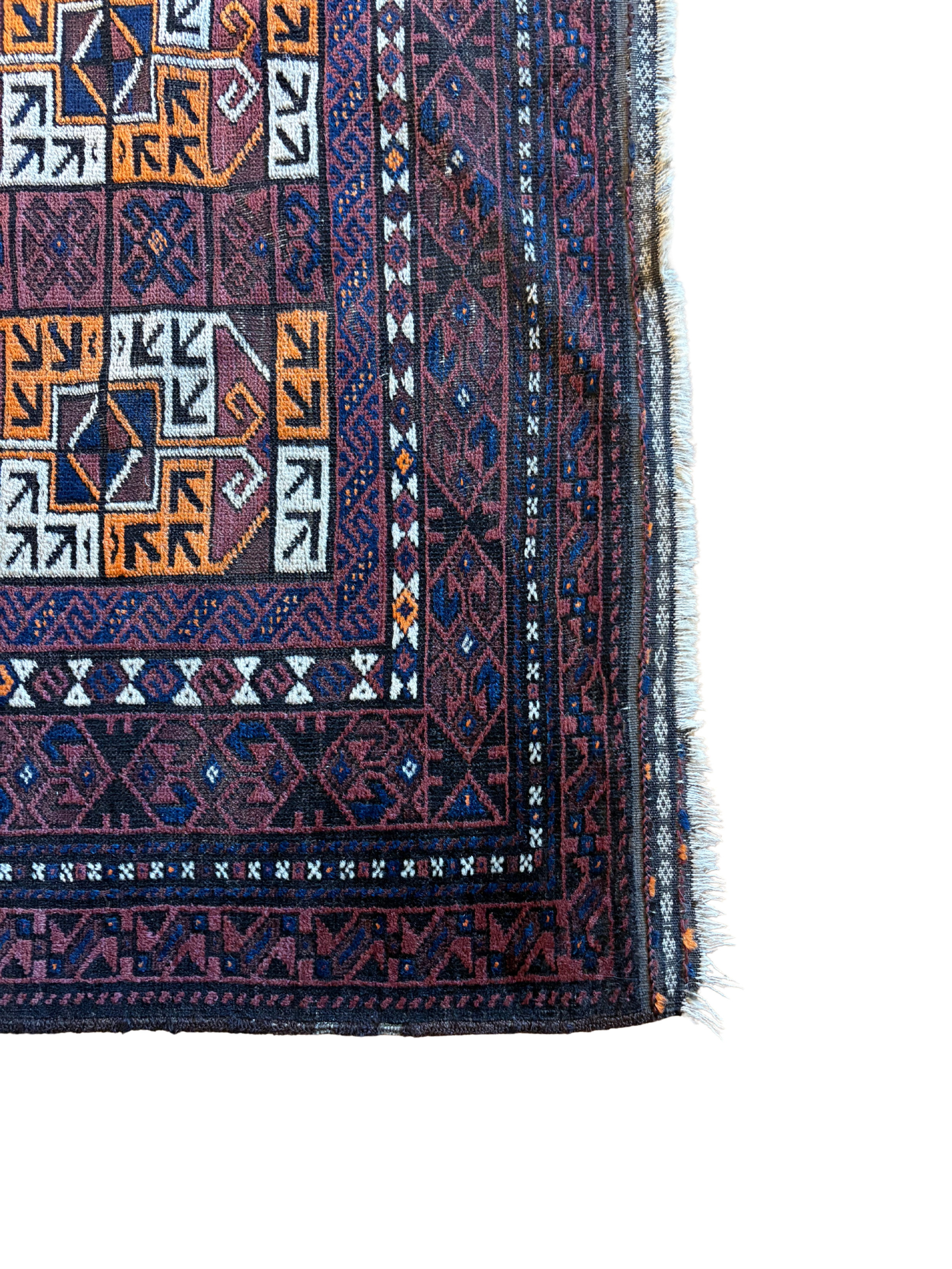
Of particular note is the surviving flatwoven end, incorporating an ivory and dark reciprocal band with small supplementary coloured details. The rug is hand-knotted in wool on a wool foundation and retains the soft handle and irregularities characteristic of tribal weaving.
A strongly graphic example with unusually generous proportions, well suited to a hall, gallery, dining room or behind a sofa. Wear and minor irregularities consistent with age and use.
Origin: North-East Persia, probably Khorasan
Date: c.1900–1930
Style: Baluch
Dimensions: 130 x 340cm
An early 20th century tribal kelleh, attributed to the Baluch weaving tradition of north-eastern Persia, probably Khorasan.
The long rectangular field is arranged with two rows of eight geometric medallions, worked in ivory, ochre, indigo and madder tones against a deep red ground. The field is enclosed by multiple narrow geometric borders in the characteristic dark palette associated with Baluch weaving.
Of particular note is the surviving flatwoven end, incorporating an ivory and dark reciprocal band with small supplementary coloured details. The rug is hand-knotted in wool on a wool foundation and retains the soft handle and irregularities characteristic of tribal weaving.
A strongly graphic example with unusually generous proportions, well suited to a hall, gallery, dining room or behind a sofa. Wear and minor irregularities consistent with age and use.
Origin: North-East Persia, probably Khorasan
Date: c.1900–1930
Style: Baluch
Dimensions: 130 x 340cm