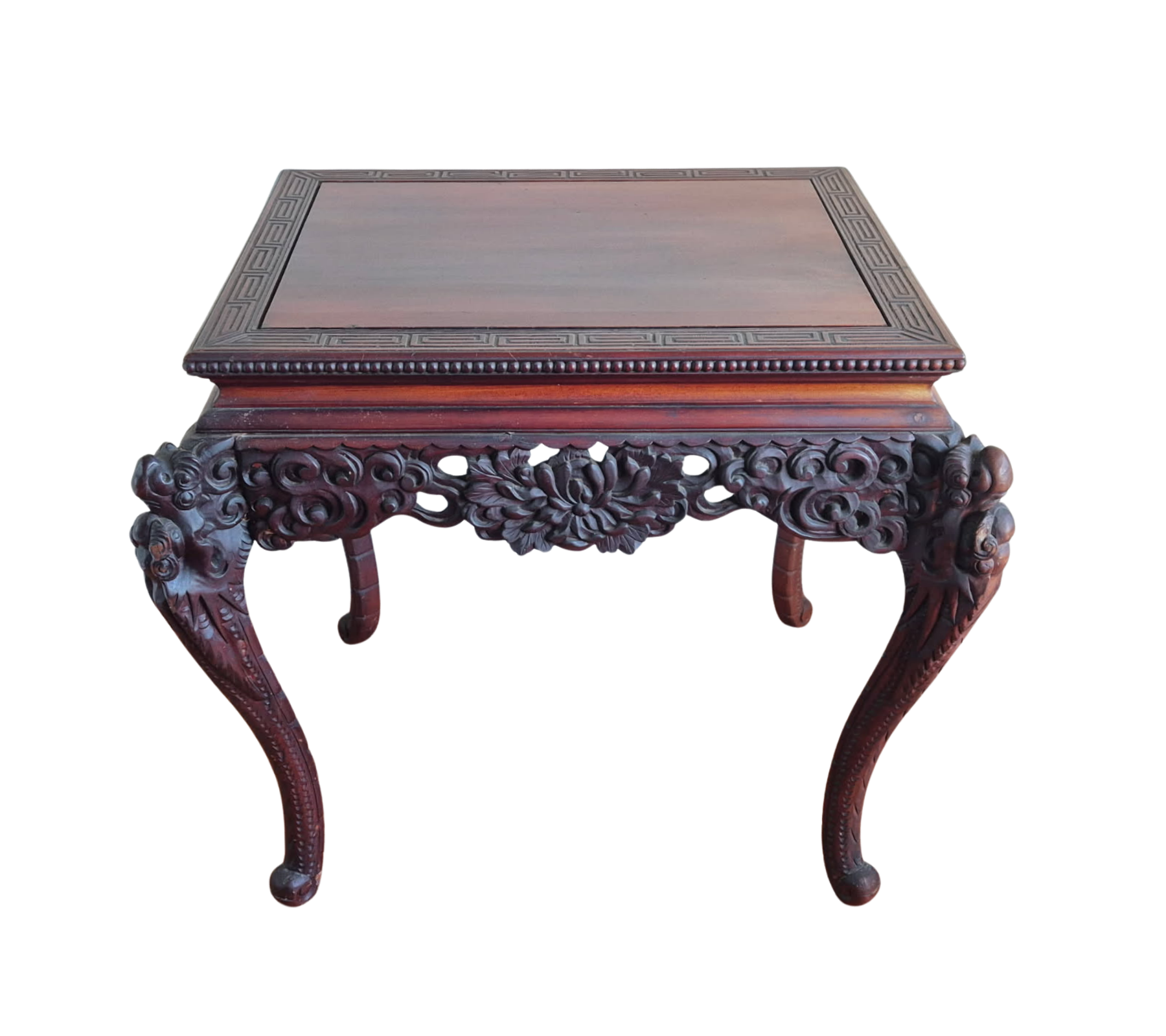
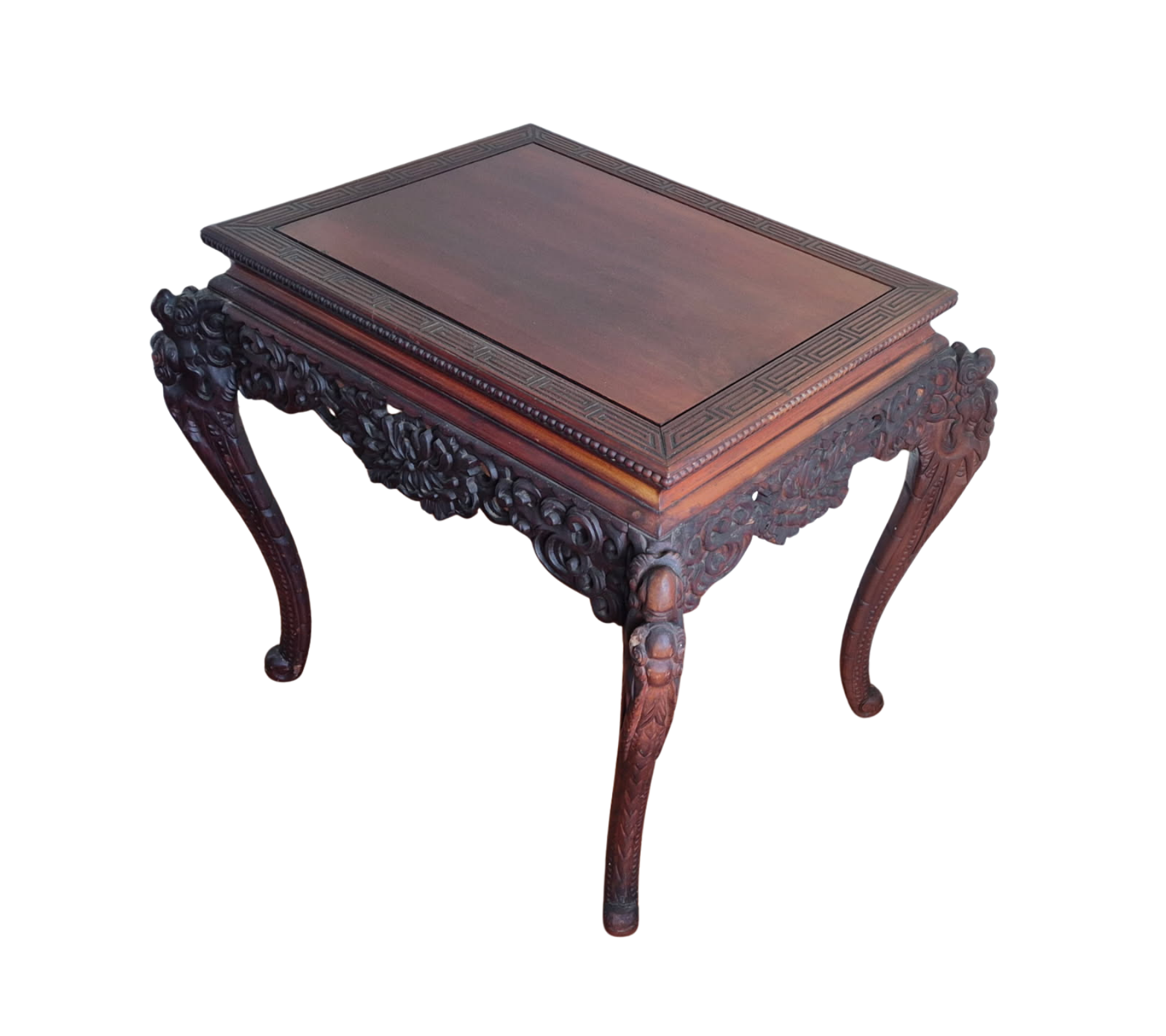
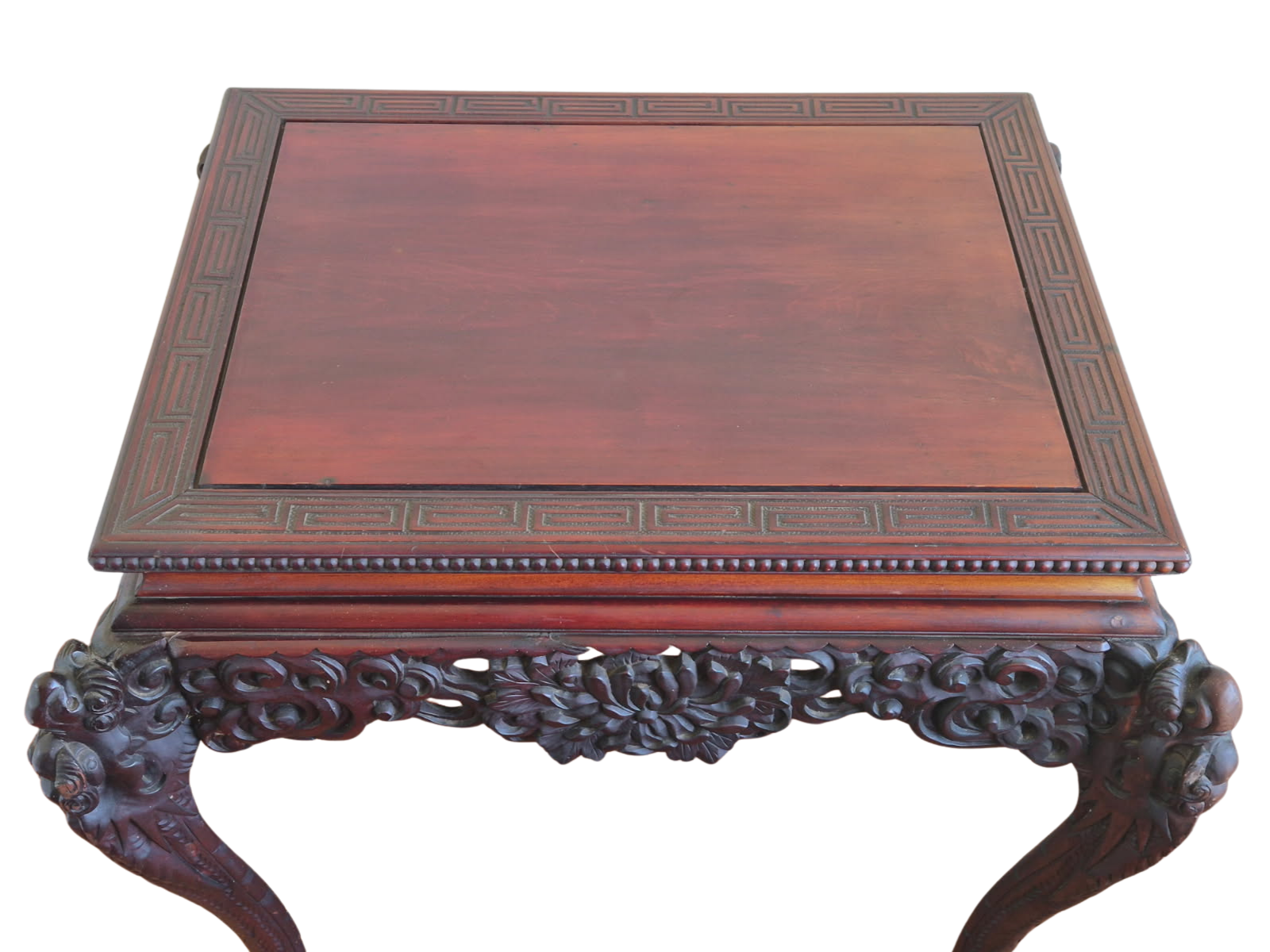
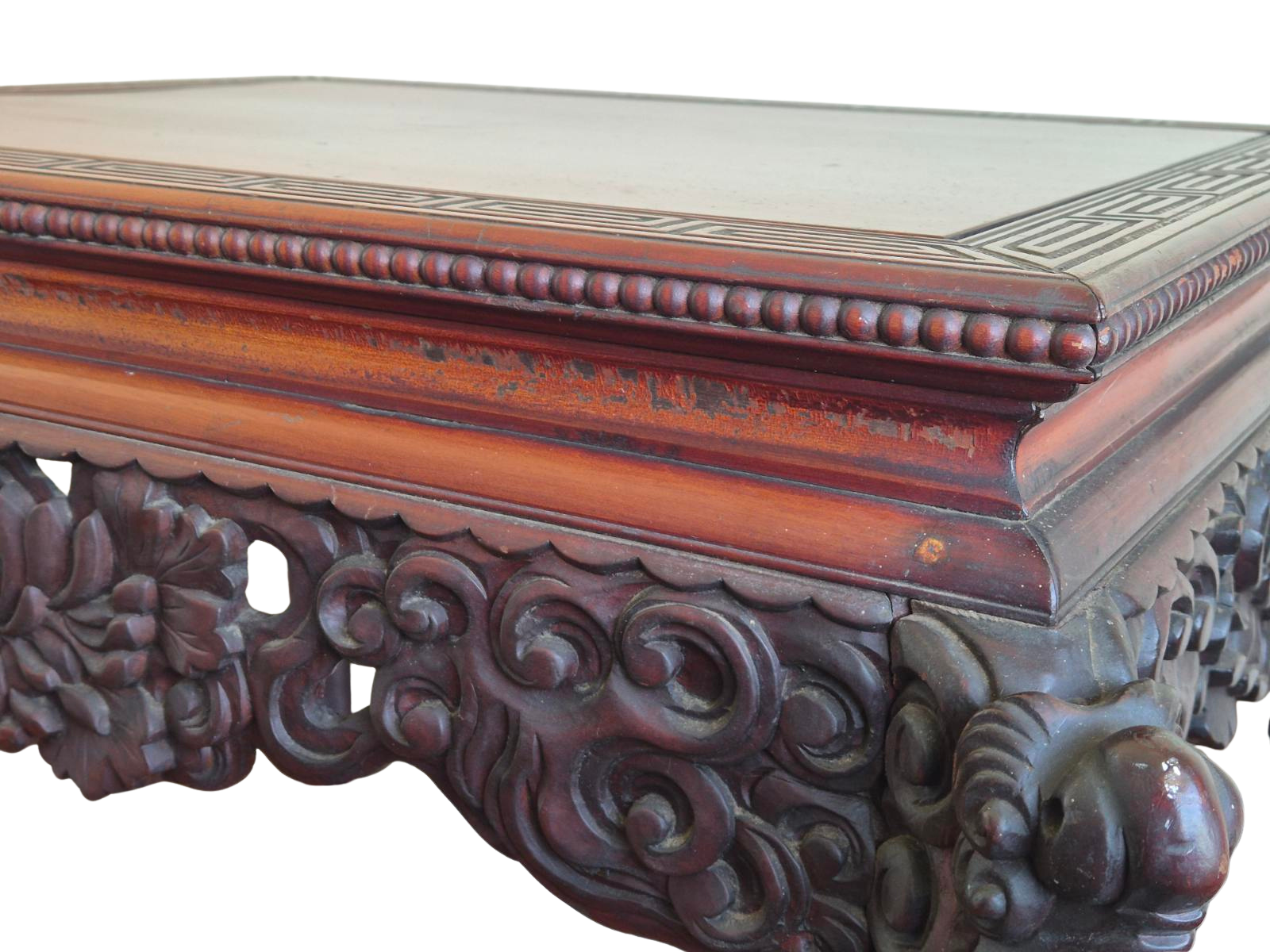
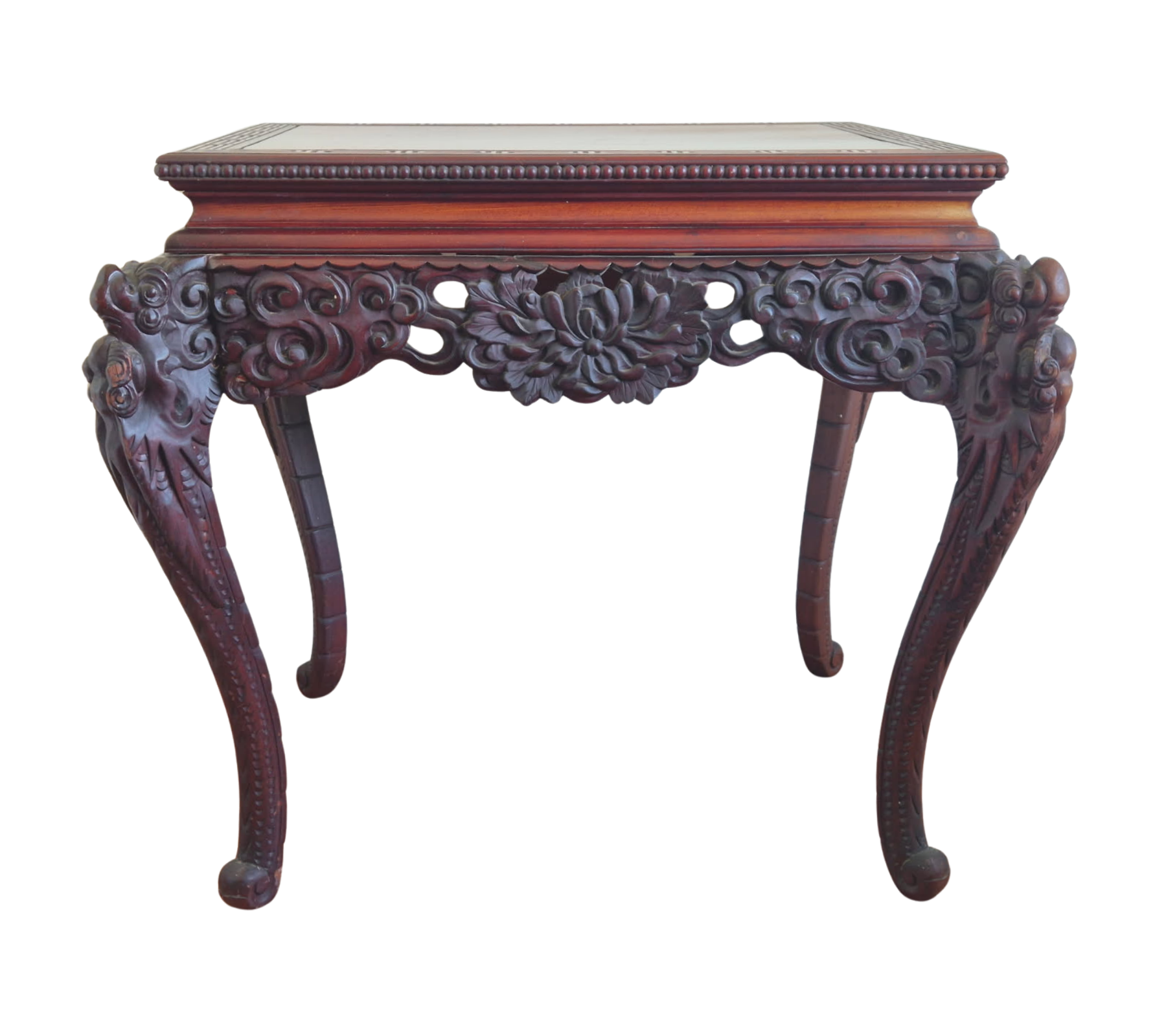
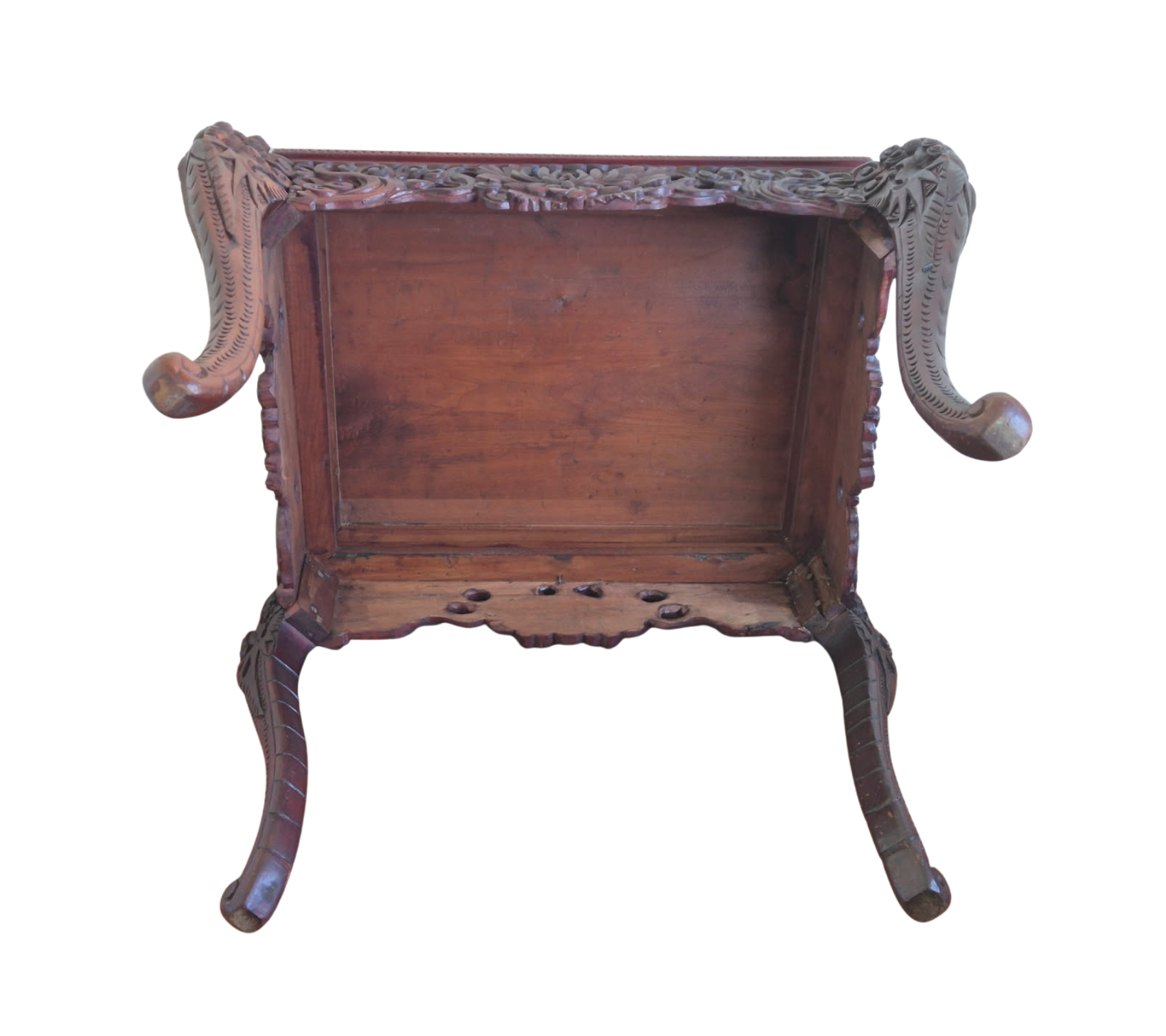
An exceptional Japanese carved hardwood table dating to the late Meiji period, with a rectangular panelled top bordered by an incised geometric meander and continuous beaded moulding. The substantial base is extensively hand carved and pierced with scrolling foliage and flowering chrysanthemum or peony motifs, raised on four dramatically swept legs issuing from carved shishi guardian lion masks.
Produced in Japan around the turn of the 20th century, the table belongs to the tradition of highly accomplished Meiji export furniture, combining Japanese decorative motifs and carving techniques with a Western furniture form. The restrained geometric treatment of the top provides a striking contrast to the deeply undercut and sculptural carving below.
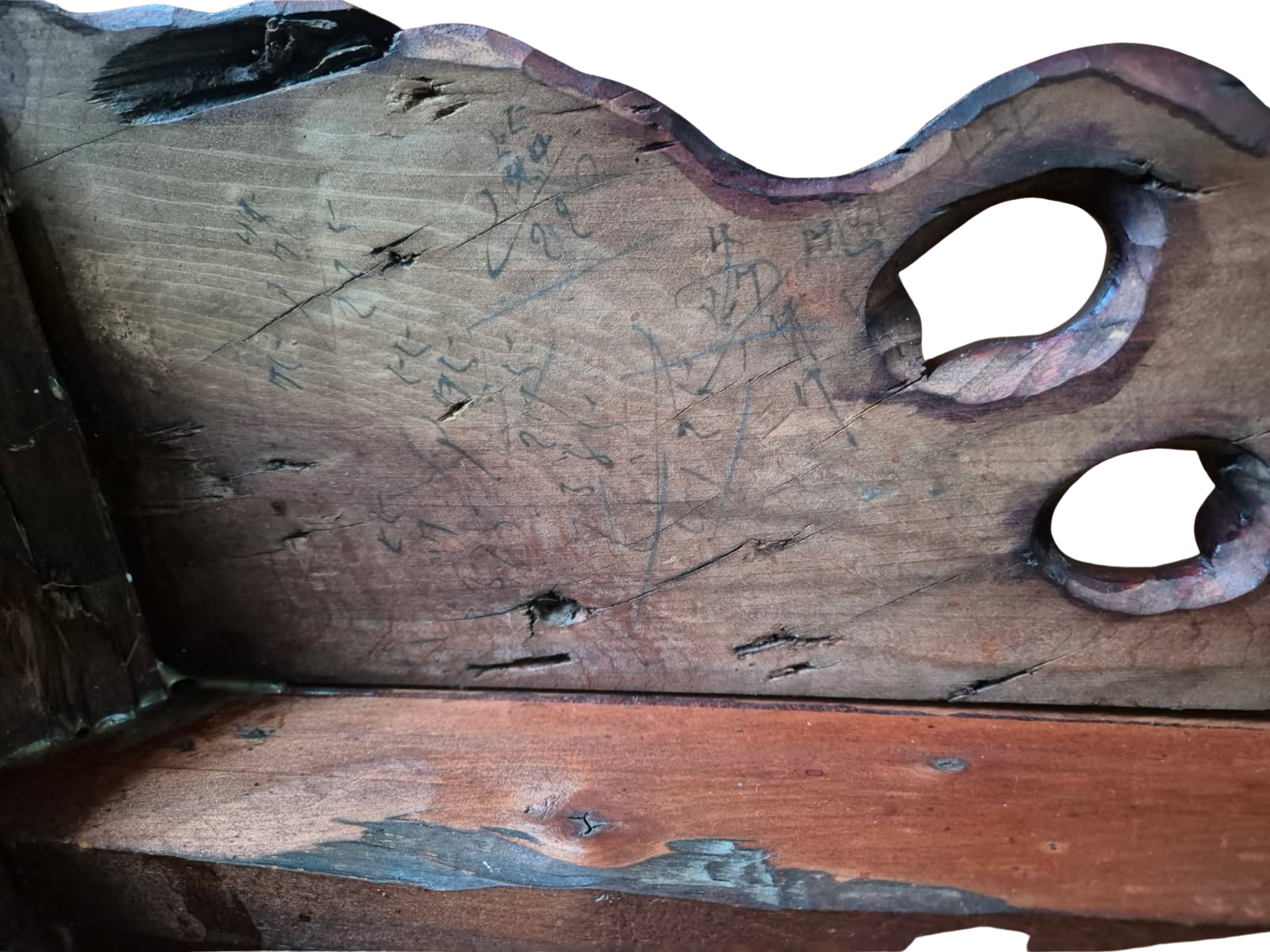
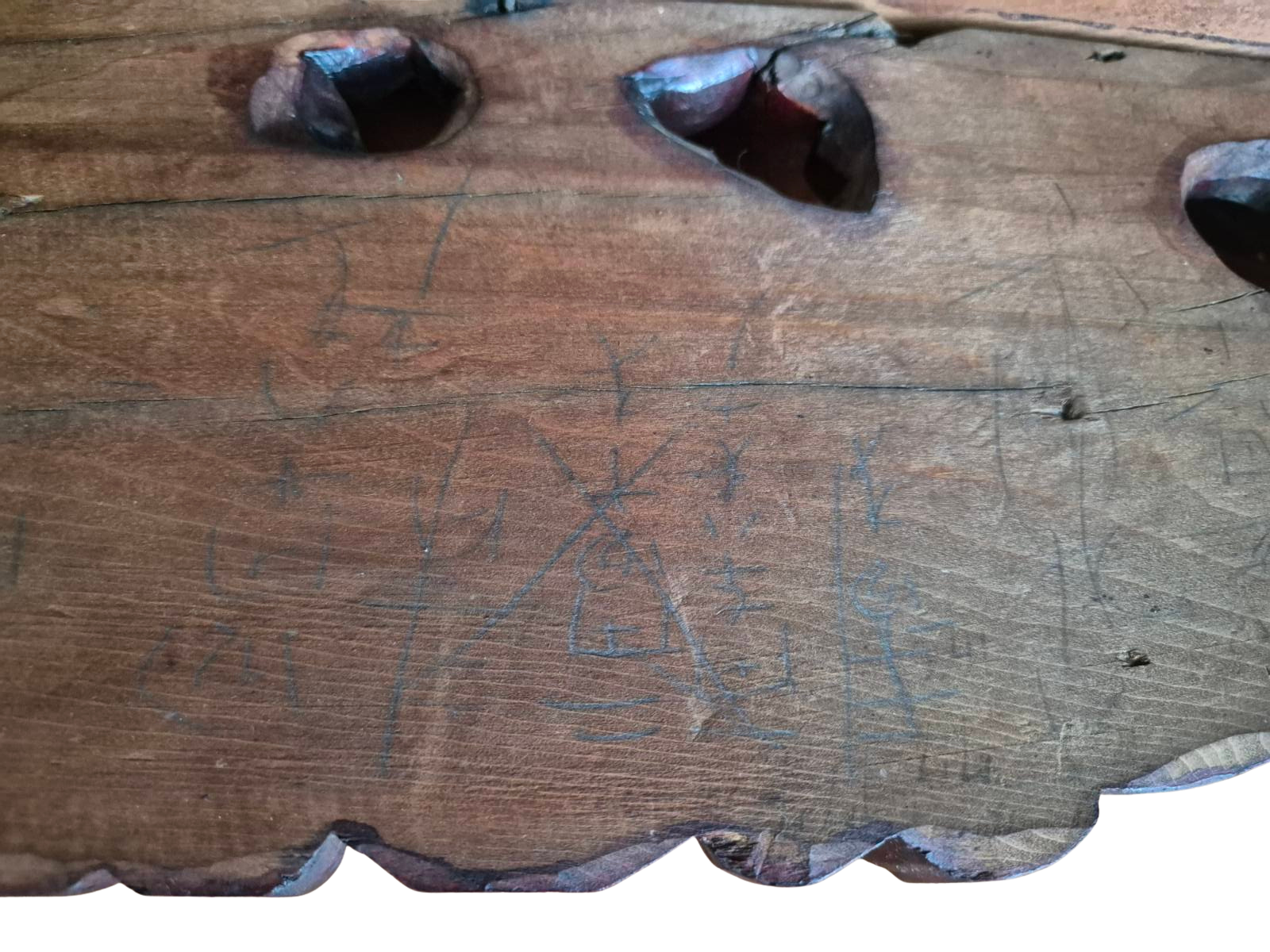
Presented in good antique condition with a rich, aged surface throughout. Expected wear, marks and small losses to the carved decoration are present, consistent with age and use. Historic inscriptions and markings remain preserved to the underside.
Japanese, Meiji period, c.1890–1910.
Dimensions: 89cm wide × 74cm deep × 77cm high.