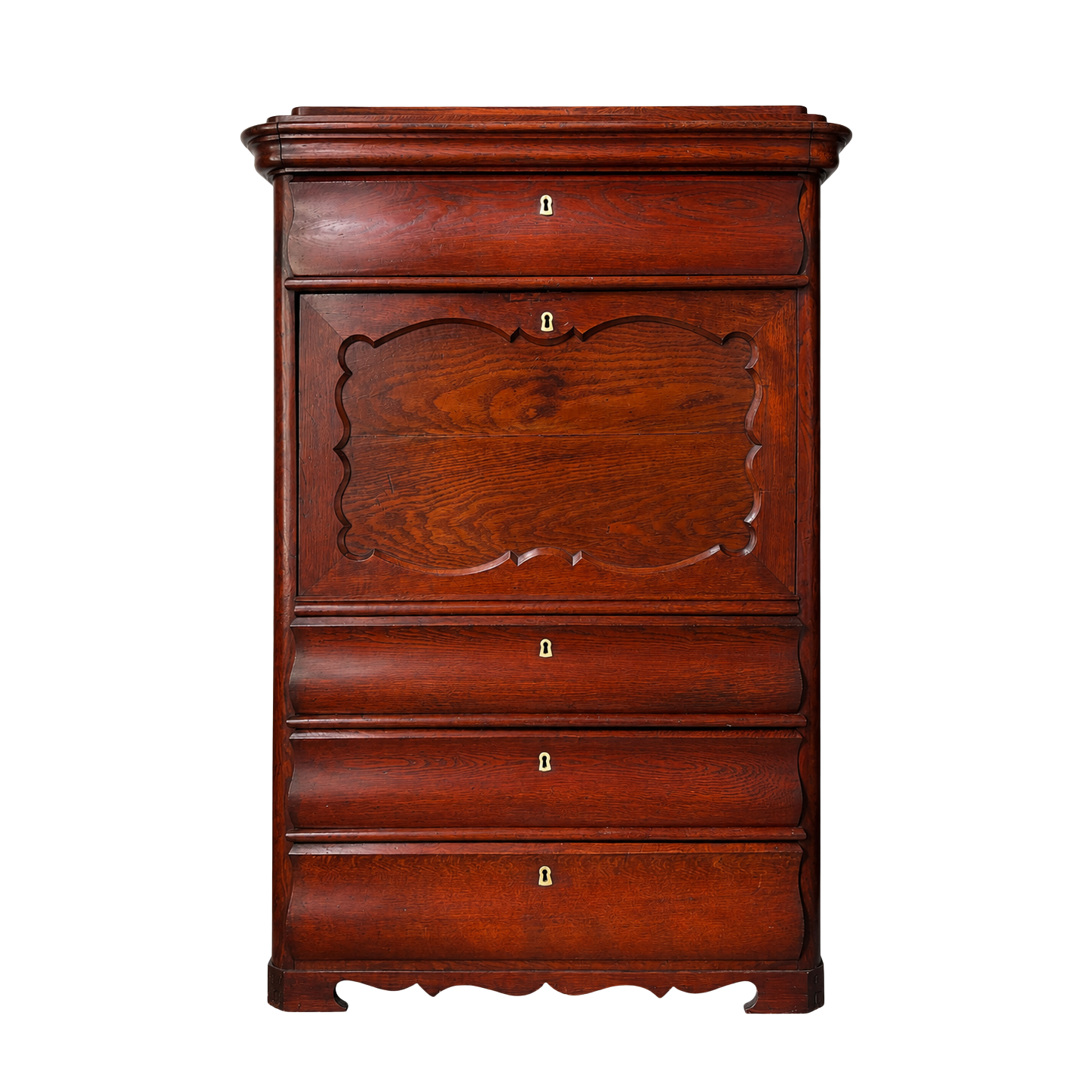
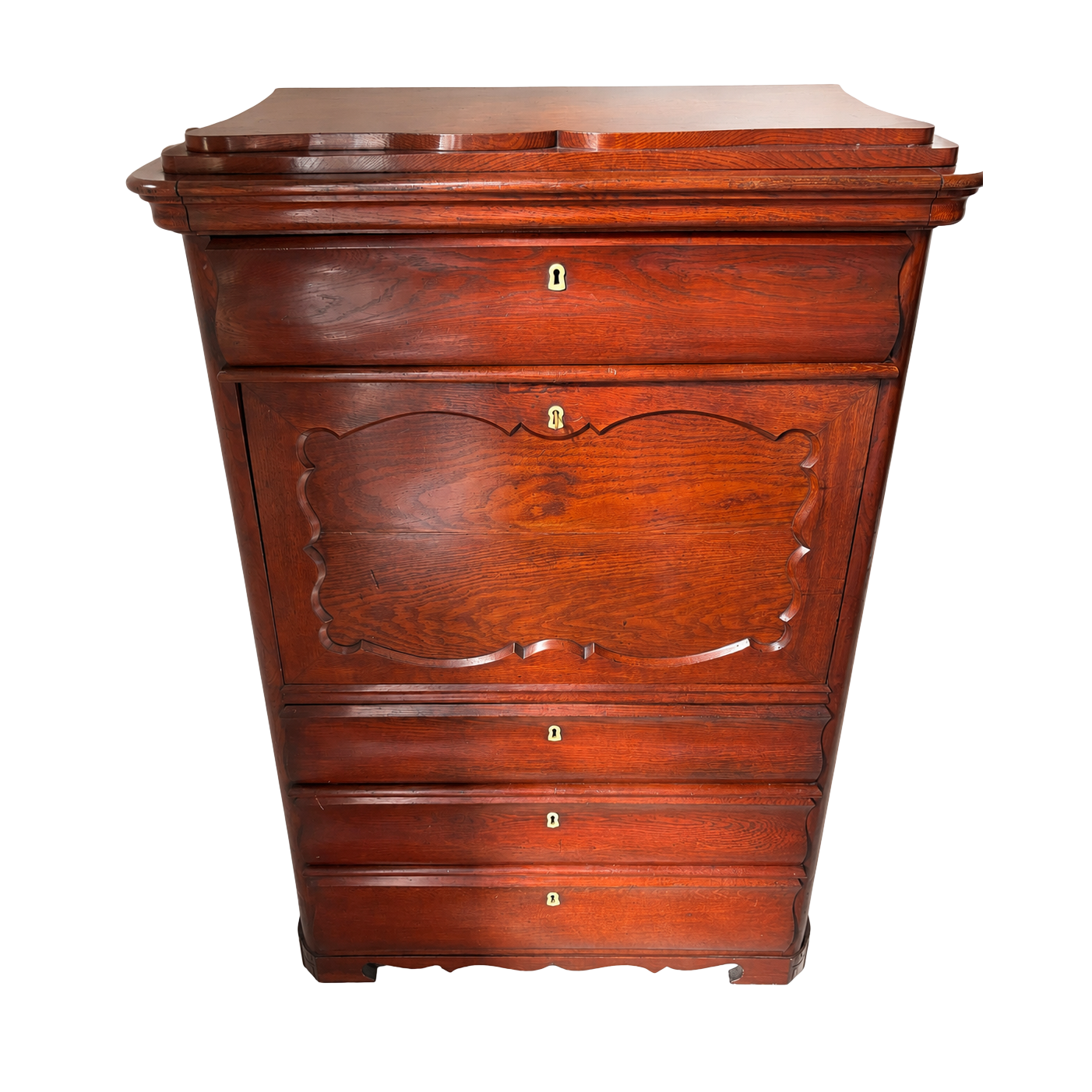
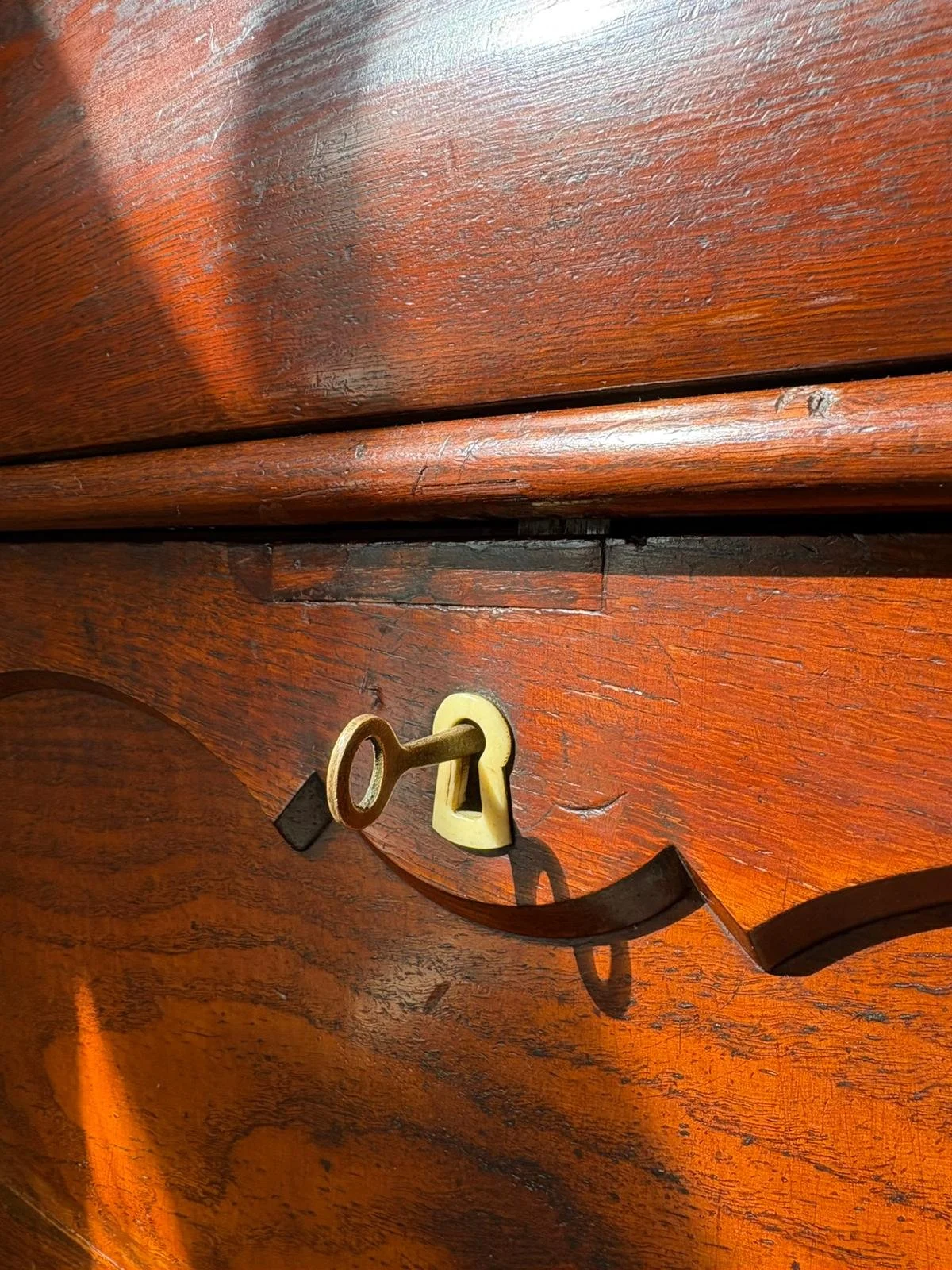
Constructed throughout in solid oak and retaining a simulated rosewood finish, the secrétaire is arranged with a deep frieze drawer above a shaped moulded fall front and three graduated drawers below, each retaining an ivory escutcheon.
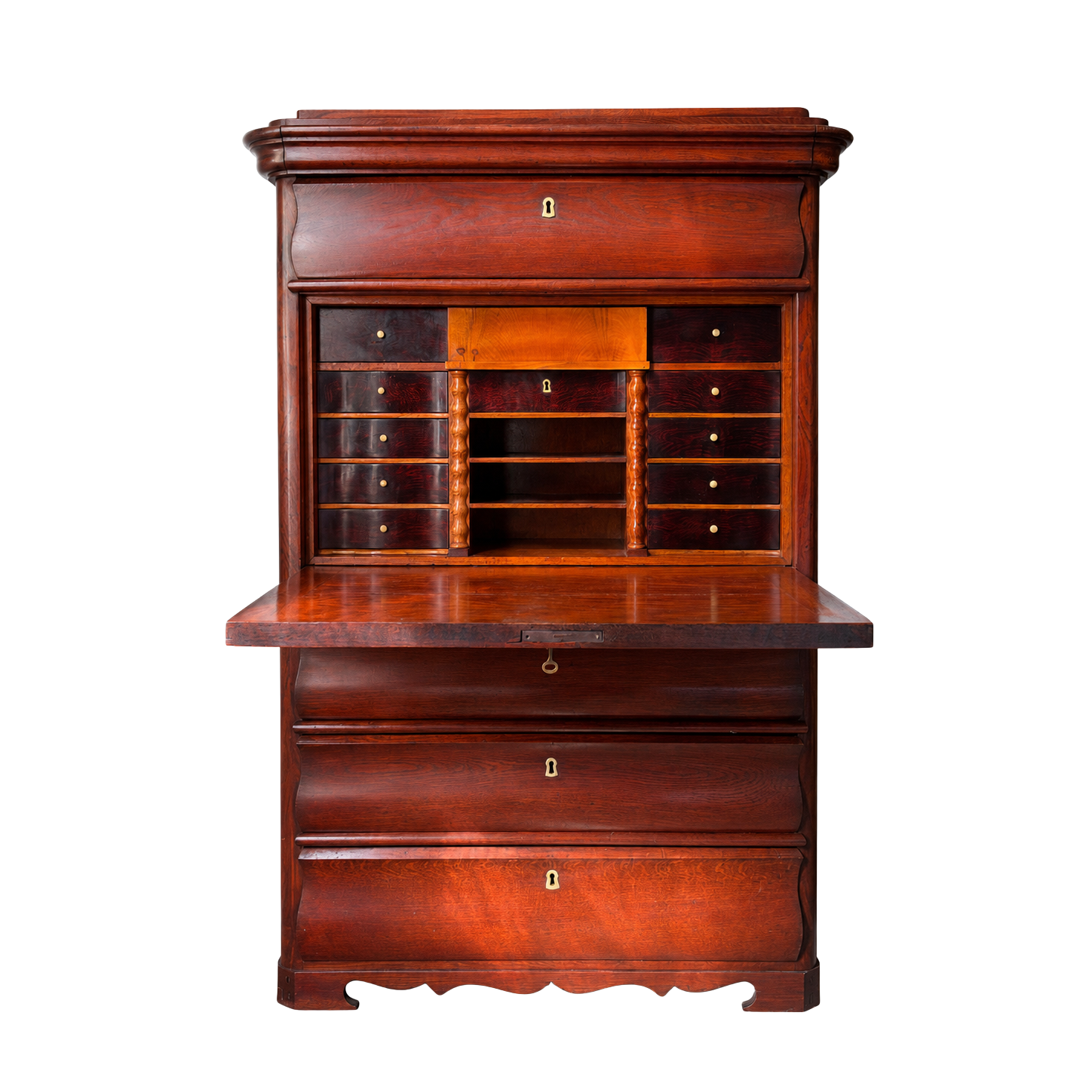
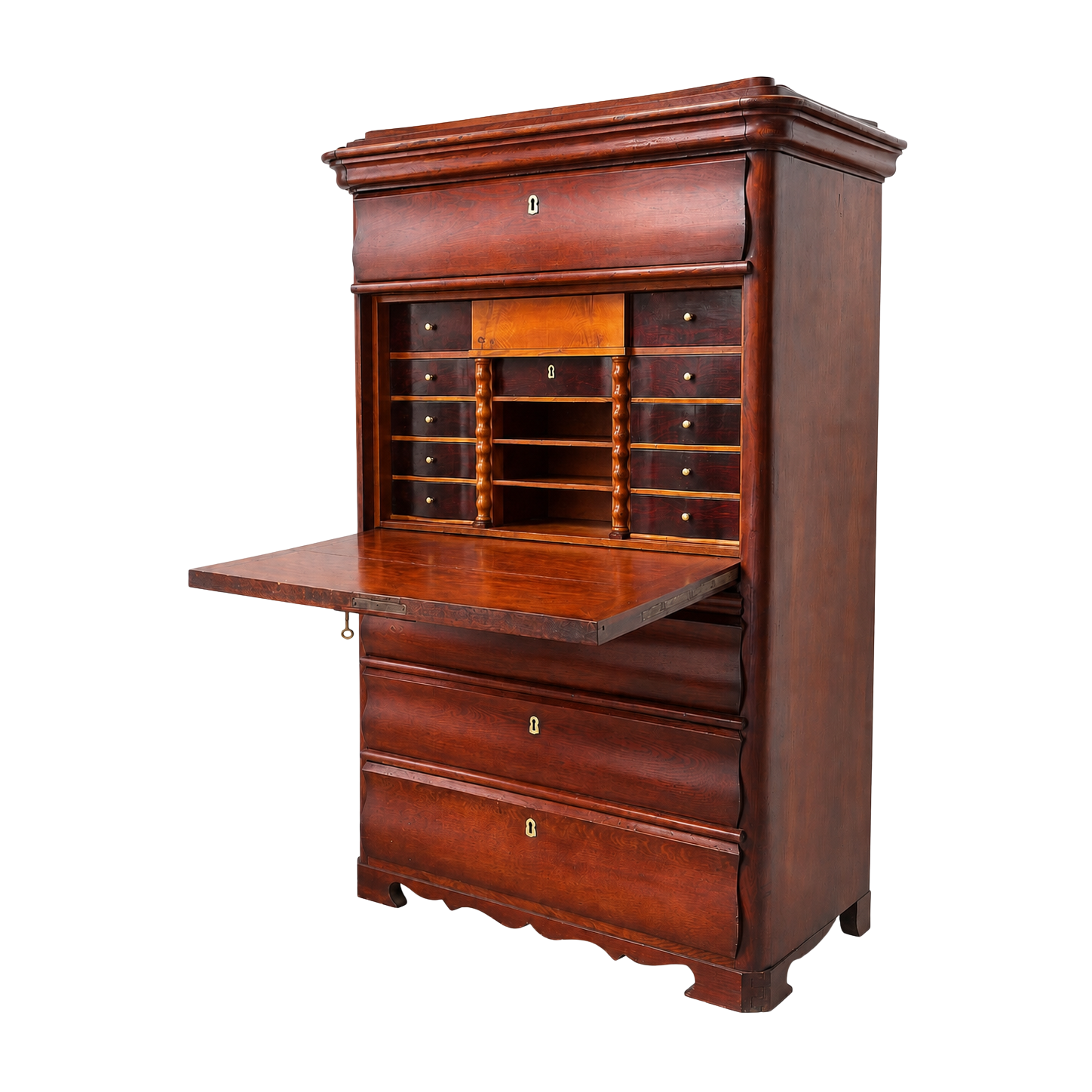
The fall front opens to reveal a fitted interior of small drawers arranged around an open central compartment divided by turned columns, together with concealed storage and a broad writing surface. The use of solid oak beneath faux rosewood graining is an unusual feature and distinguishes the piece from the more commonly encountered veneered examples.
The architectural form and disciplined symmetry place the secrétaire within the transitional period between later Biedermeier and Louis-Philippe design.
North German or Danish, circa 1845.
Dimensions: 100cm W x 56cm D x 156cm H.
$350 flat-rate delivery available for Brisbane, Sydney and Melbourne Metropolitan areas. Contact us to arrange inspection or collection by appointment from Teneriffe, Queensland.
Constructed throughout in solid oak and retaining a simulated rosewood finish, the secrétaire is arranged with a deep frieze drawer above a shaped moulded fall front and three graduated drawers below, each retaining an ivory escutcheon.
The fall front opens to reveal a fitted interior of small drawers arranged around an open central compartment divided by turned columns, together with concealed storage and a broad writing surface. The use of solid oak beneath faux rosewood graining is an unusual feature and distinguishes the piece from the more commonly encountered veneered examples.
The architectural form and disciplined symmetry place the secrétaire within the transitional period between later Biedermeier and Louis-Philippe design.
North German or Danish, circa 1845.
Dimensions: 100cm W x 56cm D x 156cm H.
$350 flat-rate delivery available for Brisbane, Sydney and Melbourne Metropolitan areas. Contact us to arrange inspection or collection by appointment from Teneriffe, Queensland.